The New ₹5 Crore E-Invoicing Rule Is a Good Reason to Look at What Odoo Can Actually Do
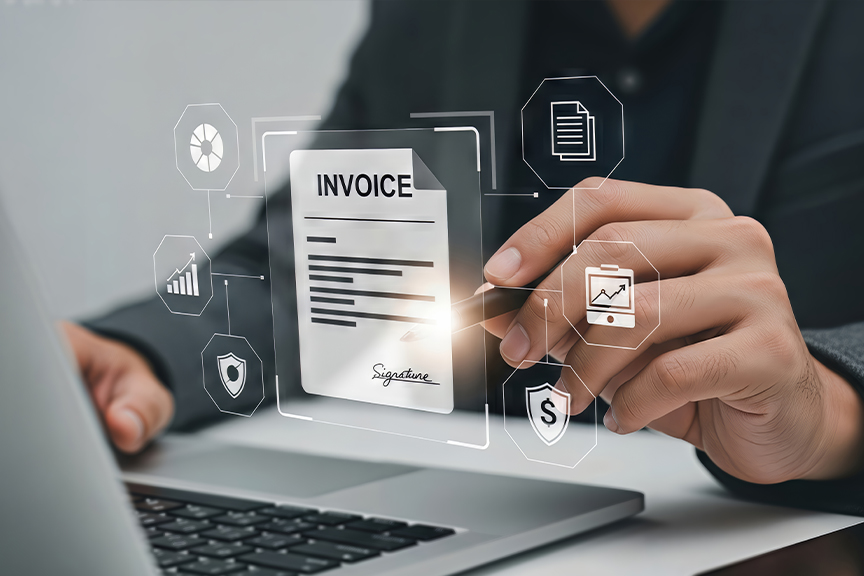
From April 1, 2026, e-invoicing became mandatory for every business in India with a turnover of ₹5 crore or more. Cross ₹10 crore, and there’s an added layer — invoices now have to reach the government’s Invoice Registration Portal (IRP) within 30 days of being raised.
That’s the news. But the more useful conversation isn’t really about the rule itself — it’s about what it exposes: most businesses at this size are running billing on tools that were never built to talk to each other, let alone to a government portal in real time. That gap is where an ERP like Odoo stops being a “nice to have” and starts being the thing that actually holds the business together.
We’ve spent enough time inside Odoo implementations to know exactly where that gap usually shows up — and what closing it properly looks like.
Where most businesses are actually stuck
Walk into a typical mid-sized company and you’ll usually find some version of this: Tally or a similar tool for accounting, a separate inventory spreadsheet, a CRM that nobody fully trusts, and invoices that get typed up manually or exported and re-entered somewhere else. Each tool works fine on its own. None of them share a single source of truth.
That setup was tolerable when invoicing was a document you emailed a customer. It stops being tolerable when invoicing becomes a real-time, validated transaction with the government — because now every disconnected step is a place where something can fail silently.
This is the actual case for Odoo, and it has very little to do with compliance for its own sake.
What a proper Odoo implementation changes
The value isn’t “Odoo has an invoicing module.” Plenty of tools do. The value is in how Odoo’s Accounting, Sales, and Inventory apps sit on the same data model:
This is really what “digital transformation” means in practice for a mid-sized Indian business right now: not a big abstract shift, but a concrete decision about whether your core operational data lives in one connected system or six disconnected ones.
What good implementation work actually involves
The mistake we see most often isn’t choosing the wrong ERP — Odoo is a strong fit for a wide range of Indian businesses. It’s treating implementation as a software install rather than a process redesign. A rollout that actually works usually covers:
None of this is exotic. It’s just the difference between an ERP that quietly does its job and one that becomes another disconnected tool six months in.
Where to start
If your business recently crossed the ₹5 crore threshold, that’s a reasonable trigger to ask a broader question: is your current setup actually built to run the business, or has it just been patched together to survive this long?
That’s usually a short conversation to have — worth having before a compliance deadline forces it.
Author
With 17+ years of visionary leadership in the IT industry, Ragesh Unnikrishnan has pioneered scalable technology solutions that empower businesses across global markets.